Flea and tick interior broadcast remediation addresses the developmental cycle of fleas (*Ctenocephalides felis*) and brown dog ticks (*Rhipicephalus sanguineus*) within residential living zones. Unlike localized…
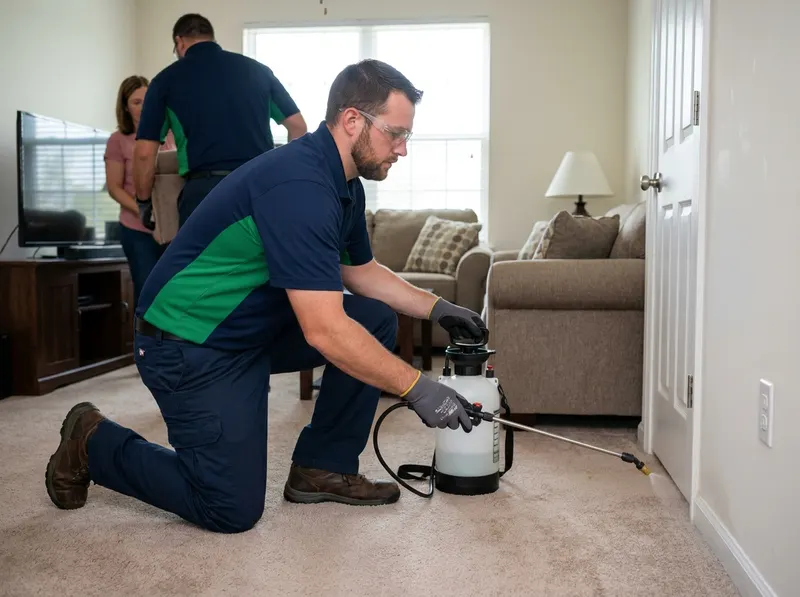
Flea and tick interior broadcast remediation addresses the developmental cycle of fleas (*Ctenocephalides felis*) and brown dog ticks (*Rhipicephalus sanguineus*) within residential living zones. Unlike localized topical pet treatments, broadcast remediation treats the indoor biological reservoir where 95% of an infestation resides as eggs, larvae, and pupal cocoons. In single-family layouts throughout Meadowbrook Acres, Quaker Hill, and Derby Run, synthetic carpet fibers and floor seams harbor organic debris that sustains larvae. The remediation process introduces an adulticide paired with an Insect Growth Regulator (IGR) such as pyriproxyfen. The IGR prevents emerging larvae from completing metamorphosis into biting adults, interrupting the multi-generation cycle without requiring abrasive residual powders.
Properties bordering wooded perimeters, such as Briar Park, Garrison Lake Green, and areas near Tidbury Creek County Park or Brecknock County Park, experience persistent parasite pressure transported indoors by domestic animals or entering wildlife. When adult parasites migrate into high-traffic rooms, localized spot-spraying fails to penetrate baseboard voids or under-furniture carpet pile. Broadcast remediation applies an even, low-pressure droplet mist directly across 100% of exposed carpet planes and hardwood subfloor joints. The treatment creates a dry, invisible residual layer. Occupants must plan for a strict 4-hour re-entry period to allow the water carrier to evaporate completely, ensuring the compound bonds securely to carpet fibers before foot traffic resumes.
Decision fit depends on the depth of infestation. If an owner observes isolated adult ticks immediately after visiting Killens Pond State Park or Moores Lake, manual removal and host-animal veterinary care are usually sufficient. However, when indoor flea larvae emerge continuously from baseboards in the Moores Lake District, Willow Run, or the Rodney Village Area, broad interior remediation is necessary. The trade-off involves preparation labor: property managers and residents must thoroughly vacuum all carpeted rooms, wash animal bedding at 140°F, and clear floor spaces to allow continuous liquid contact. Treatments operate without mandatory ongoing subscription agreements, resolving structural infestation through biological targeting.
Every job gets a firm, written price after a free on-site visit.
Tell us about your flea and tick interior broadcast remediation job in Denver and we'll send a clear, written quote, usually the same day.
 Zandora Pest Elimination