Spotted lanternfly infestations across Kent County present measurable structural risks to landscape trees and residential outdoor structures. In established neighborhoods such as Meadowbrook Acres and Derby Run, mature…
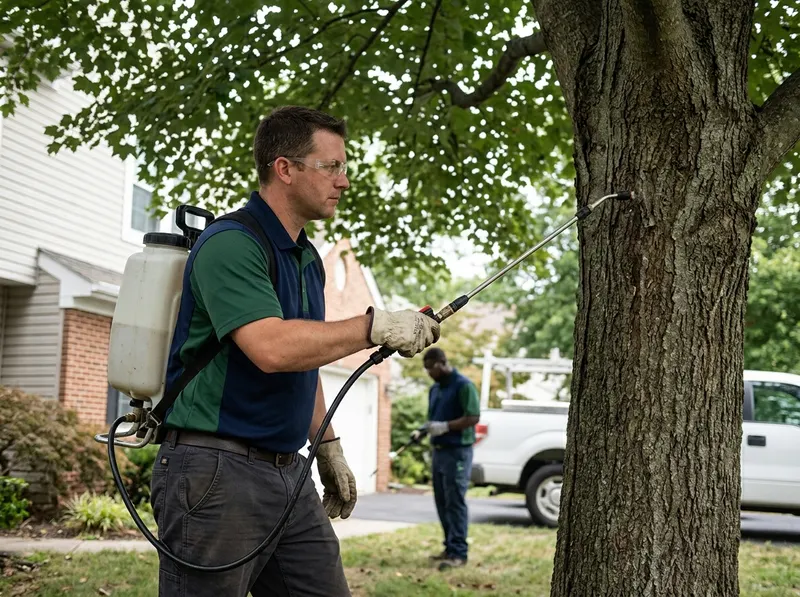
Spotted lanternfly infestations across Kent County present measurable structural risks to landscape trees and residential outdoor structures. In established neighborhoods such as Meadowbrook Acres and Derby Run, mature silver maples, oaks, and fruit-bearing trees attract dense populations of lanternfly nymphs between May and July, progressing to feeding adults by late August. Adult lanternflies excrete large volumes of honeydew, a sugary waste liquid that coats decks, driveways, and lower foliage, leading to rapid accumulations of black sooty mold. Targeted basal trunk injections deliver systemic dinotefuran or imidacloprid directly into vascular tissues, providing targeted internal defense without aerially dispersing chemicals into domestic recreation zones near Moores Lake District or Tidbury Creek County Park.
Decision guidance relies on canopy height, proximity to sensitive waterways, and infestation timing. If an infestation is detected between September and April, mechanical egg mass scraping paired with physical barrier banding provides non-chemical suppression for localized properties near Garrison Lake Green. If active swarms feed on mature canopies over 30 feet in height during late summer, systemic trunk injections or targeted canopy foliar sprays become necessary to disrupt the feeding cycle before oviposition. The operational trade-off centers on application method: systemic injections require active sap flow and up to two weeks to distribute throughout the upper branches, whereas contact perimeter sprays deliver immediate adult knock-down but lack residual translocation through the tree tissue.
Tree pest management does not require mandatory multi-year service agreements. Program options provide standalone, single-event intervention during peak feeding periods, or seasonal two-stage applications to interrupt both early nymph emergence and adult egg laying. Treatments comply with Kent County environmental guidelines, avoiding broad-spectrum broadcast spraying near open water tables around Moores Lake and preserving beneficial pollinator populations in domestic garden beds.
Every job gets a firm, written price after a free on-site visit.
Tell us about your spotted lanternfly and tree pest defense job in Denver and we'll send a clear, written quote, usually the same day.
 Zandora Pest Elimination